

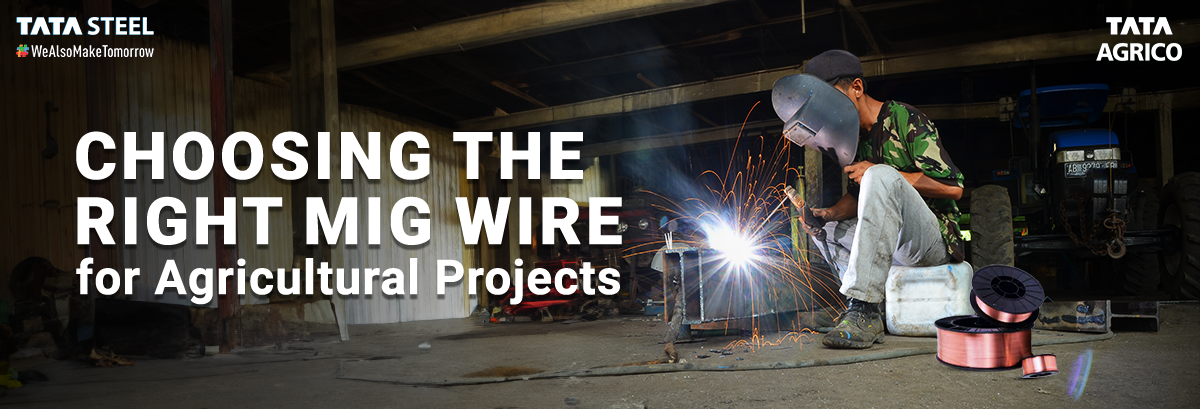


The process of joining two pieces of metal together is known as welding. The metal is heated and then fused with pressure. This process is often used in agriculture to build barns, repair fences and create other structures. Therefore, welding is an important task if you work in the farming industry. It’s a skill that is useful throughout the year. A working knowledge of MIG wire welding, for example, will help you if your equipment breaks down, particularly during harvesting and planting times.
Why do you need to choose the right MIG wire for your farm? Let’s discuss.
The Importance of Welding in Agriculture
Farmers often need to modify and repair equipment and machinery, such as chutes, hitches, animal pens and gates. Repairing a broken plough on the field can save the crop during harvesting.
Another advantage of welding includes hard-facing, which is the application of wear-resistant material to the surface of a component by welding. This is done to reduce wear and it can be done on the original equipment and also for repairing worn components. Many machines, equipment and other miscellaneous items benefit from hard-facing. They are protected from three categories of wear: impact, metal-to-metal and abrasion.
Abrasion is among the most common types of wear. It’s often found in earth-engaging tools such as blades, teeth, tractor buckets, feed mixers and grain-handling items. The impact wear includes equipment used to smash and pound, such as crushers. Metal-to-metal includes steel components that slide or roll against each other and include shafts, wheels, gear teeth, pulleys and idlers on track drives.
Some other MIG wire welding applications on farms include:
- Welding steel tubes for milking parlour
- Patching sheet metal on equipment such as combines
- Repairing aluminium irrigation pipes
- Mending spreaders, seeders, wagons and other machine that can collapse on the field
- Welding self-locking panels together
- Constructing fences
- Hard-facing tillage equipment and skid loader buckets
- Repairing stainless steel tanks
- Repairing aluminium engine manifolds
Benefits of Choosing the Right MIG Wire
When it comes to learning how to weld with MIG wire, it’s easier. Even first-time MIG wire users can achieve a proper weld. For the farm, MIG wire offers many advantages, such as:
- Easiest process to learn
- Welds thick plates or light-gauge material
- Welds all mainstream metals—aluminium, stainless steel and carbon steel
- Welding speeds are high, which reduces construction or repair time
Welding in agriculture creates and repairs equipment. From a broken tractor to a piece of farm equipment, learning how to weld with MIG wire has many advantages in the long run. That’s why you should choose the right MIG wire from Tata Agrico.