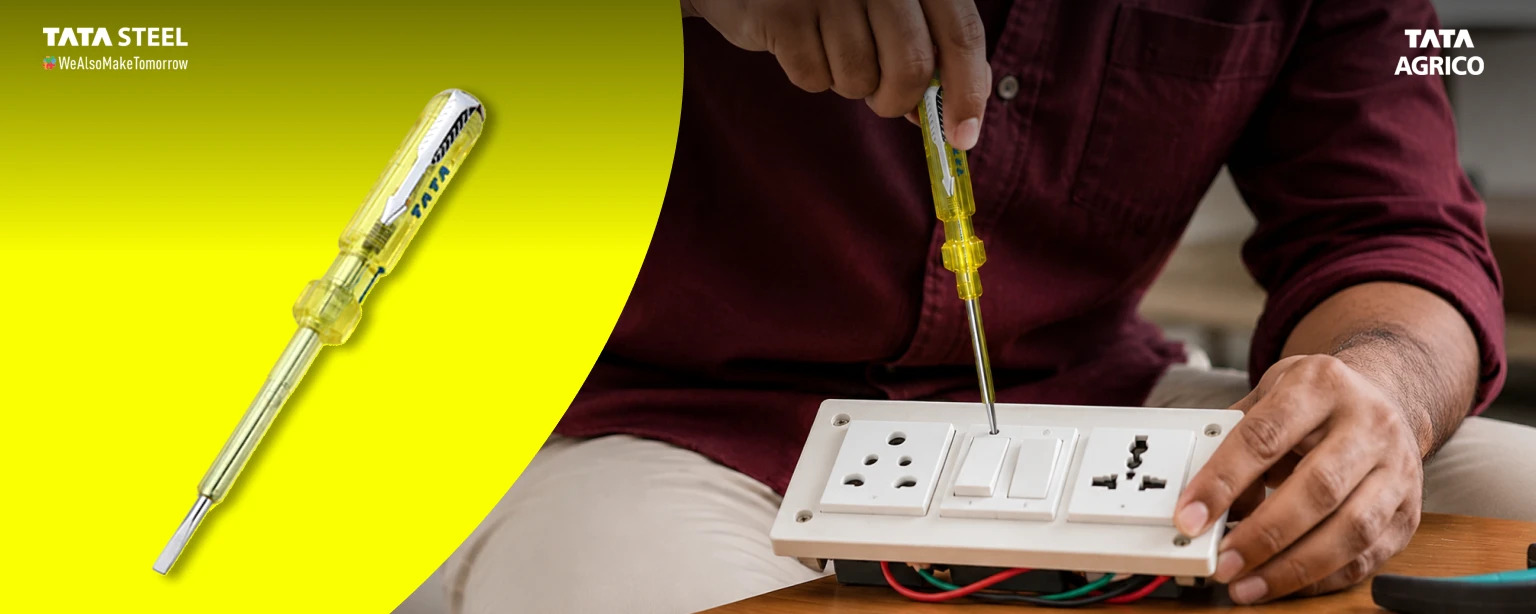


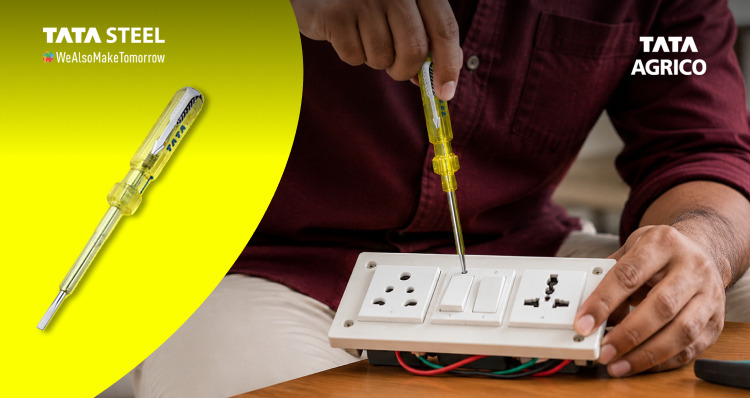


Working on basic electrical repairs begins with one important step: confirming whether a circuit is live. A neon bulb tester is one of the simplest tools for detecting the presence of electrical current during routine inspections and minor troubleshooting. However, using it correctly is just as important as owning one.
This neon tester guide explains how to use the tool safely, its limitations, and the precautions every DIY user should follow before working around electrical circuits.
Why Use a Neon Bulb Tester?
A neon bulb tester is an electrical safety tester designed to detect the presence of voltage in electrical circuits. It contains a built-in neon indicator that glows when it comes into contact with a live conductor.
Compact and easy to carry, it is commonly used for:
- Live wire testing
- Checking electrical sockets
- Identifying live terminals
- Basic home electrical troubleshooting
DIY tools such as the Tata Agrico Small Neon Bulb Tester (125 mm) are designed for convenient everyday maintenance while supporting safer inspection practices.
How to Use a Neon Tester Safely
Before beginning any home electrical testing, inspect both the tester and the surrounding work area. A damaged tester or unsafe working conditions can increase electrical hazards.
Inspect the Tester Before Use
Check the tester for:
- Damaged insulation
- Loose or bent probe tips
- Signs of wear or cracks
- Suitability for the expected voltage
Never use a damaged electrical safety tester.
Test a Known Live Source First
Before testing the actual circuit, verify that the tester works by checking a known live outlet or conductor. This confirms that the tester is functioning properly before use.
Test the Live Wire
Always follow the manufacturer’s instructions. Place the probe on the exposed terminal while holding the insulated grip. A bright glow from the neon lamp indicates the presence of voltage, while a dim glow may suggest leakage current or high-impedance conditions that should be interpreted with caution.
Confirm the Result
If the tester does not glow, do not immediately assume the circuit is safe.
Test the tester again on a known live source to confirm it is still working. Before touching any conductors, isolate the power supply and, where safety is critical, verify the circuit using an appropriate, calibrated testing instrument.
Safety Tips for Home Electrical Testing
Even the best neon tester is intended only for basic voltage detection. Following safe work practices helps reduce electrical risks.
Always:
- Work with dry hands and in dry surroundings.
- Wear appropriate personal protective equipment where necessary.
- Hold only the insulated portion of the tester.
- Inspect the tester before every use.
- Switch off and isolate power before handling electrical wiring.
These simple precautions help you use electrical safety tools more safely and effectively during routine maintenance.
Know the Limitations of a Neon Tester
Although a voltage tester for home use is convenient, it should not be treated as a complete electrical diagnostic tool.
A neon tester:
- Detects the presence of voltage but does not measure voltage accurately.
- May not detect low-voltage circuits reliably.
- Can produce weak indications due to induced or leakage voltage.
- Should not replace professional testing equipment during critical electrical work.
For precise voltage measurement or advanced troubleshooting, electricians typically use calibrated multimeters or specialised voltage detectors.
Safe Testing Starts with the Right Tool
When selecting an electrical tester for DIY projects, look for:
- Durable insulated construction
- Clear neon indication
- Comfortable grip
- Compact design for easy handling
- Reliable build quality
If you’re planning to buy an electrical tester online in India, choosing a reliable tester from a trusted manufacturer like Tata Agrico helps support safer everyday electrical maintenance. Tata Agrico’s Small Neon Bulb Tester is designed as a compact, easy-to-carry solution for checking sockets, identifying live wires, and supporting basic electrical troubleshooting during everyday maintenance.
Frequently Asked Questions around Neon Bulb Tester
What is a neon bulb tester and how does it work?
A neon bulb tester is a simple electrical safety tester containing a neon lamp and an internal resistor. When the probe contacts a live conductor and completes a circuit, the lamp glows to indicate the presence of voltage. It is intended for basic voltage detection rather than precise measurement.
What are the limitations of using a neon bulb tester for live wire detection?
A neon tester cannot accurately measure voltage and may not reliably detect low-voltage circuits. It can also show weak indications due to leakage or induced voltage. For safety-critical home electrical testing, important results should always be verified using calibrated testing equipment.
When should a non-contact voltage tester be preferred over a neon bulb tester?
A non-contact voltage tester is useful for quickly checking the presence of voltage without touching exposed conductors. However, for safety-critical electrical work, it should be used alongside appropriate testing methods. When comparing the best voltage tester online, choose one that suits your intended application.
Where can I buy a neon bulb tester?
Those planning to buy a neon bulb tester online should compare build quality, insulation, ease of use, and manufacturer reliability instead of price alone. Trusted brands such as Tata Agrico offer compact testers designed for everyday electrical maintenance and DIY applications.