



Farming often places significant stress on the environment and natural resources. Sustainable farming practices are meant to protect the ecosystem, expand the planet’s resource base and maintain and enhance soil fertility. Among the several crops grown in India, sugarcane is the second largest agro-based industry. However, the cultivation and harvesting of sugarcane is difficult. How can manual cane choppers help make these practices more sustainable? Let’s find out.
Harvesting Sugarcane
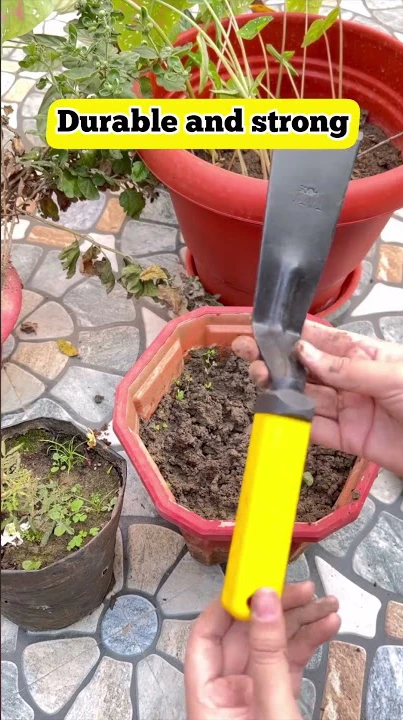
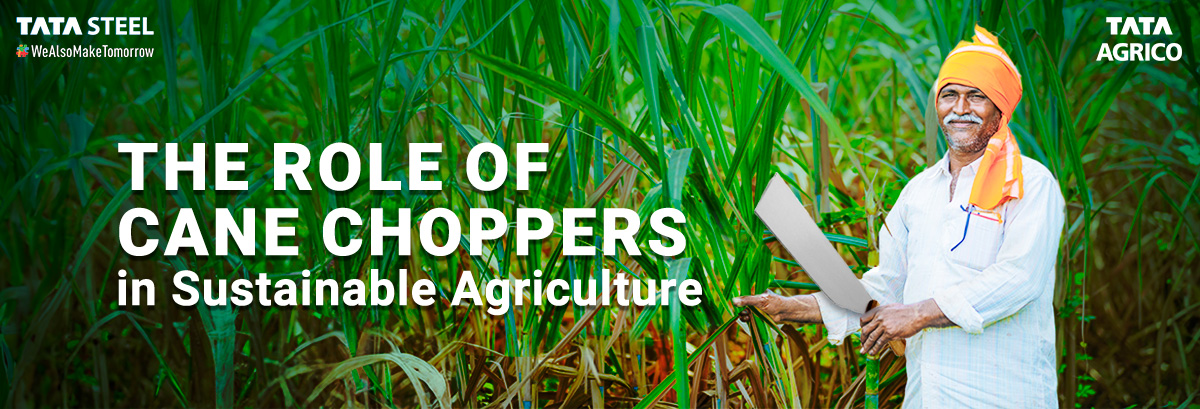
In India, sugarcane harvesting is carried out 10-18 months after planting. Hand axes and cane choppers are frequently used for manual harvesting. It has a handle that provides the user with a good swing and grip. The curved and strong blade helps to cut through tough sugarcane stalks. There are specific harvesting machines for sugarcane as well. However, mechanical harvesting has certain issues, such as:
- No meticulous judgment for optional maturity
- No selective harvesting
- Not appropriate for crops requiring more than one harvest
Sugarcane harvesting requires precise judgment, especially when determining crop maturity. Mechanical choppers often make mistakes and cut down stalks that need more time to mature. Hand harvesting by skilled farmers makes sure the sugarcane stalk is cut at the right time. This inadvertently helps with soil health, ensuring less disturbance than mechanical harvesting.
Sustainable Practices
Based on a multi-pronged objective, sustainable sugarcane production strives to:
- Increase farm income
- Promote environmental health
- Improve the quality of life for farm communities and families
Sustainable sugarcane cultivation and harvesting also encompasses a varied range of practices—both organic and conventional. Cane choppers can contribute to this by ensuring crops are cut down at the right time at the right part of the stalk.
Trenching For Irrigation
Sugarcane fields are often flooded with water for irrigation. This wastes a lot of water, however, sugarcane is a “thirsty” crop—it needs a lot of water to grow. The solution to this is trenches. Where flooding wastes 2,00,000 litres of water, trench irrigation needs 70,000 litres of water for 14,400 square feet of land. This is where the multi-purpose cane chopper can be useful.
Using a cane chopper, farmers can build even and well-spaced trenches. Besides cutting through stalks, the cane chopper provides farmers with the strength and precision to do various tasks on the field.
While the adoption of sustainable farming practices may take time, Tata Agrico is here to give every sugarcane farmer a hand with the best cane chopper.