



False ceilings are designed to improve interior aesthetics and functionality, but their long-term performance depends heavily on the strength of the framework supporting them. One of the most common structural issues seen over time is sagging, where sections of the ceiling begin to dip, crack, or lose alignment.
In most cases, this problem does not begin at the surface. It starts within the support framework. Choosing durable false ceiling support channels is one of the most effective ways to prevent structural instability and ensure long-term ceiling performance.
What Causes False Ceiling Sagging
Sagging usually develops when the ceiling framework is unable to handle the load placed on it over time. This may result from poor installation, weak support members, or the use of substandard materials.
Common causes include:
- Undersized or low-strength support channels
- Excessive load from lighting or service fixtures
- Poor alignment during installation
- Material deformation caused by long-term stress
Without properly engineered ceiling framework support channels, these issues gradually affect both appearance and structural reliability.
Why Support Channel Strength Matters
The structural integrity of a false ceiling depends on how effectively load is distributed across the support framework. Strong false ceiling channels are designed to resist bending, maintain alignment, and reduce stress concentration across the ceiling grid.
This becomes especially important in:
- Large-span commercial ceilings
- Layered or recessed ceiling designs
- Interiors with integrated lighting systems
In such applications, heavy-duty false ceiling channels provide the rigidity needed to support long-term structural performance and reduce the risk of sagging.
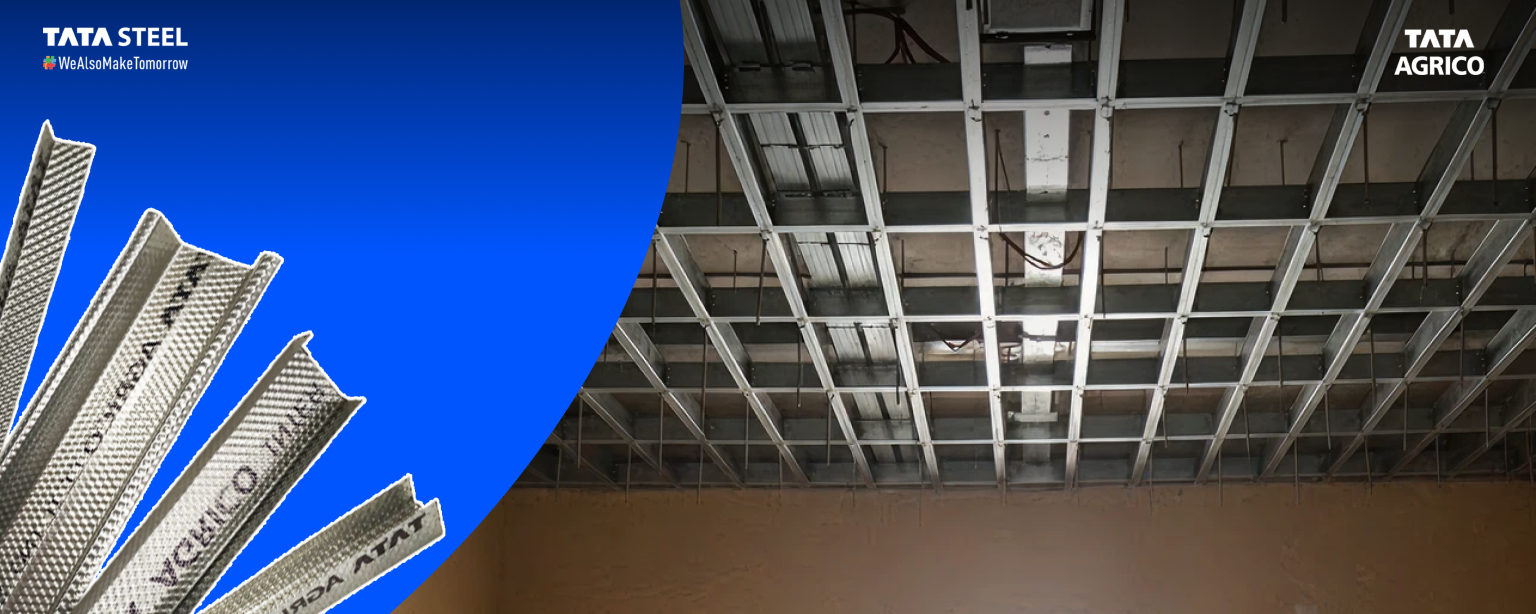
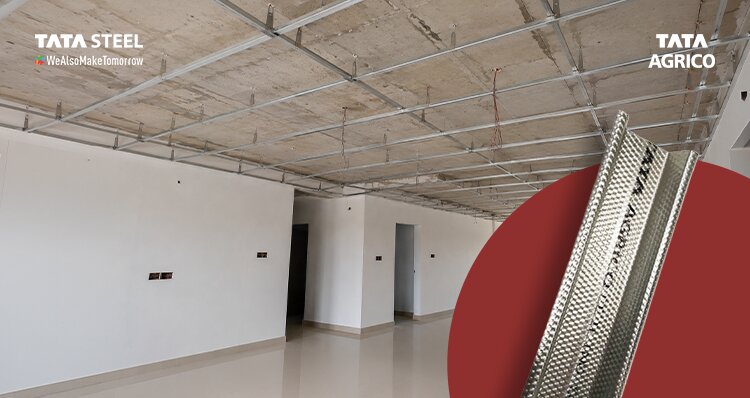
Products such as Tata Agrico False Ceiling Channels are designed to deliver consistent support under varied installation and usage conditions.
Preventing Sagging Through Better Framework Design
Preventing sagging begins during system planning, not after visible damage appears. Well-designed anti-sag false ceiling systems rely on proper spacing, correct load calculation, and stronger support components.
Key preventive measures include:
- Selecting structurally tested support channels
- Ensuring accurate framework alignment
- Matching support spacing to ceiling load requirements
- Avoiding overloading with unsupported fixtures
Using durable false ceiling support channels helps improve load distribution and reduces long-term deformation risks.
Best Solutions for Existing Sagging Problems
Once sagging appears, the solution depends on how advanced the damage is. In minor cases, reinforcement may restore structural stability. In more severe cases, replacing the affected framework becomes necessary.
Effective false ceiling sagging solutions often include:
- Replacing weakened support members
- Reinforcing the ceiling grid with stronger sections
- Correcting alignment issues during repair
- Upgrading to heavy-duty false ceiling channels for better long-term performance
These measures help restore ceiling strength while improving durability against future structural movement.
Choosing Better Materials for Crack-Free Ceiling Performance
Sagging often leads to secondary issues such as joint separation and visible surface cracks. This is why crack-free false ceiling solutions depend as much on the support framework as they do on the finishing layer.
When evaluating materials, contractors typically consider:
- Channel thickness and structural grade
- Resistance to bending and corrosion
- Dimensional consistency across batches
While false ceiling channels’ price remains an important procurement factor, long-term reliability often delivers greater value than short-term savings.
For buyers looking to buy false ceiling channels in India, choosing quality-led products becomes a more practical long-term decision.
Where Stronger Support Channels Make the Biggest Difference
Not all ceilings experience the same structural demand. However, stronger support systems are particularly important in:
- Commercial interiors with wider unsupported spans
- Retail spaces with integrated electrical and lighting loads
- Residential ceilings with layered design features
In these applications, strong false ceiling channels improve structural consistency and help maintain ceiling alignment over time.
Preventing Ceiling Failure Starts with Better Support
False ceiling sagging is rarely a surface-level problem; it is usually the result of weaknesses within the framework beneath it. Stronger ceiling framework support channels improve load distribution, reduce long-term deformation, and help maintain a cleaner ceiling finish over time.
As ceiling systems become more design-intensive and load-bearing demands increase, choosing durable false ceiling support channels becomes an essential part of long-term reliability. Solutions like Tata Agrico False Ceiling Channels, built for dependable structural performance, help deliver that support where it matters most: within the framework itself.