

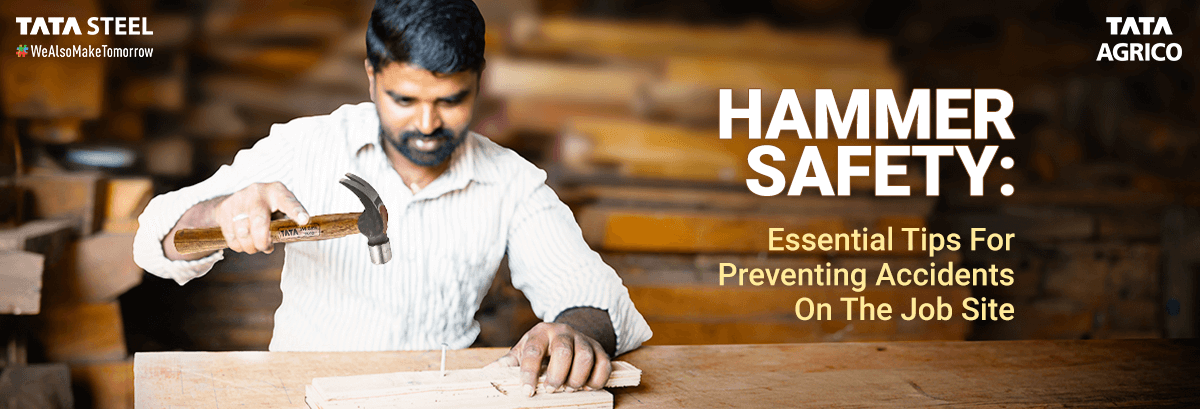


There’s no workspace on this planet that doesn’t feature a hammer. Most technicians, such as electricians or plumbers, carry a hammer in their tool kit. Despite their far-reaching applications, the improper usage of hammers can lead to hand injuries, which can be fatal, according to a study done by the National Library of Medicine. Therefore, safety should always be the top priority when using hammers.
Here are some of the best hammer safety tips.
Wear Protective Gear
Eye injuries are some of the most common injuries associated with improper hammer use. That’s why it’s important to wear safety glasses to protect your eyes from debris.
When choosing protective glasses, make sure they fit and are made of polycarbonate or any hard plastic. You must wear them even when the task is insignificant or small.
Choose the Right Hammer For the Job
Different hammers are devised for different jobs, so it’s necessary to select the correct one for the job.
A claw hammeris the most common type of hammer and it’s mostly used for nailing into wood. A ball point hammer is ideal for hammering metals—the smaller shape makes it easier to work in tight spaces. A soft-faced hammer has a copper, rubber or plastic head, which is designed to protect surfaces. This tool is used to strike objects without impacting the surface. A cross-pein hammer has a blade-like edge that’s perpendicular to the handle. It’s designed for starting tacks or panel pins without hitting fingers. This hammer is mostly used in woodworking or crafts that require precision.
Properly Inspect Before Use
Inspect for any damage before using the hammer. A cracked handle or a loose head can easily break and injure you. If you find such issues, replace the tool before using it.
Checking for corrosion or rust is also important since a damaged surface can also cause injuries.
Avoid Overreaching
Don’t overreach or get into awkward positions when using a hammer. This can cause muscle injuries and strains, making it difficult to control the hammer. Keep your body in a stable and comfortable position to maintain proper control and prevent injuries. Don’t twist your body either when using this tool since it causes shoulder and back injuries.
Hammers are ubiquitous in most tool kits. Using it safely needs a combination of proper equipment, knowledge and good habits. By following these tips, you can reduce the risk of injuries and work more effectively.