



Agricultural operations in India vary widely in scale, ranging from small landholdings to large commercial farms. Each setup presents distinct operational challenges, which directly influence the type of tools required. Selecting the right farming tools based on farm size is not just a matter of efficiency, but also of long‑term usability, cost control, and output consistency.
Understanding these differences enables farmers to invest in tools that align with their actual needs rather than adopting a one‑size‑fits‑all approach.
Tools for Small Farmers in India: Practicality Over Scale
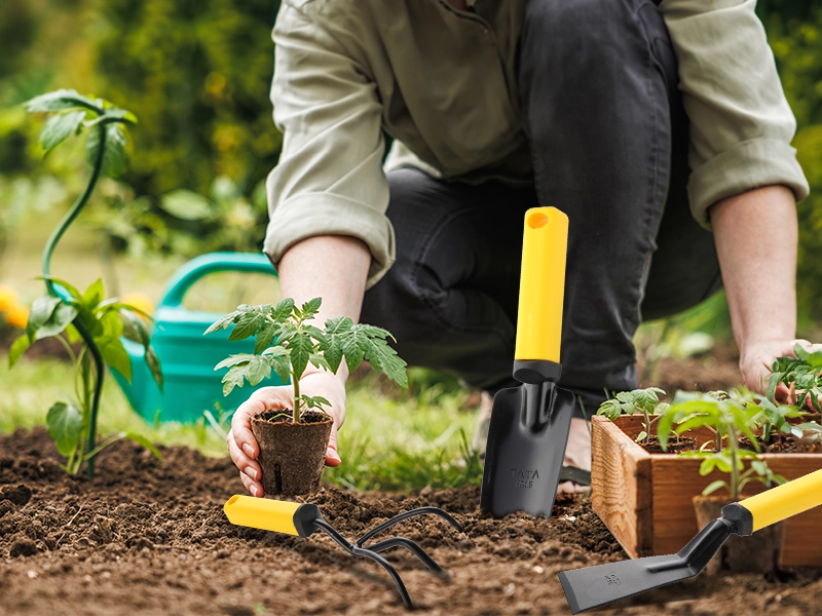
Small and marginal farmers typically operate on limited land, where flexibility and ease of use are prioritised over automation. The focus remains on agricultural tools for small‑scale farming that can handle multiple tasks without requiring high capital investment.
Key Characteristics of Tools for Small Farms
• Manual Efficiency: Tools that can be operated without machinery support
• Multi purpose Utility: Equipment designed to perform more than one function
• Ease of Maintenance: Simple designs with minimal repair and upkeep requirements
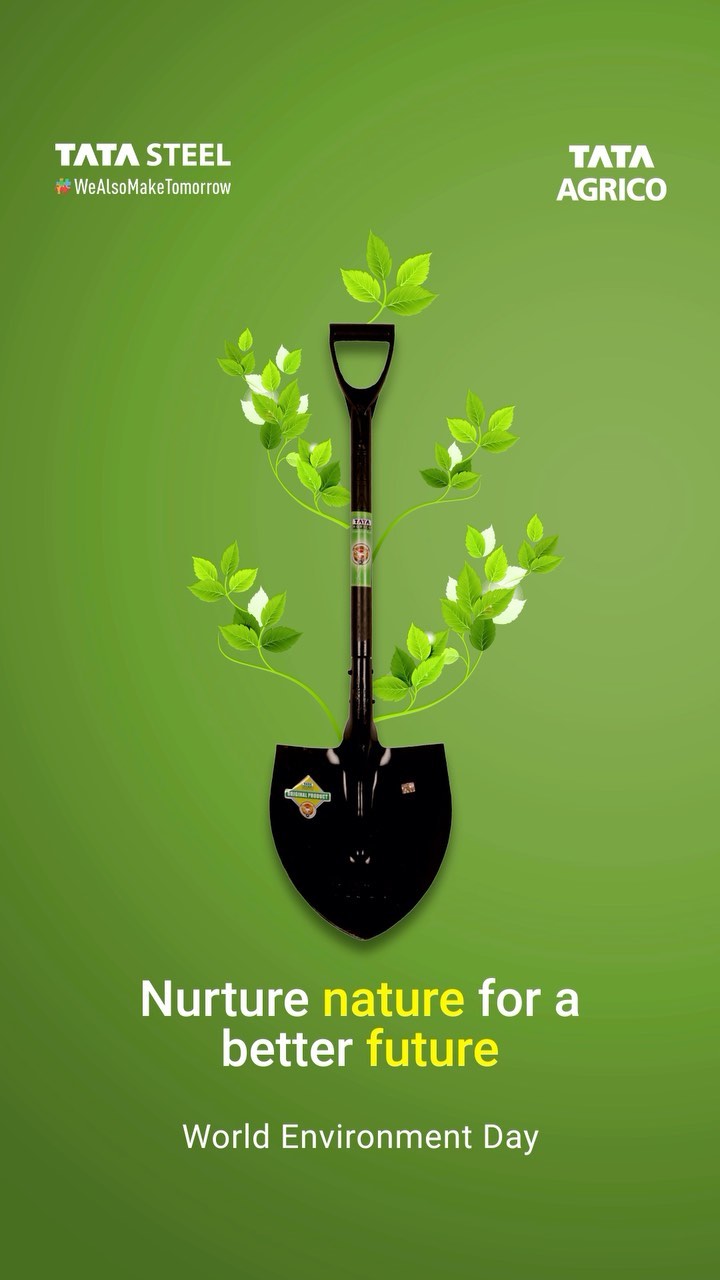
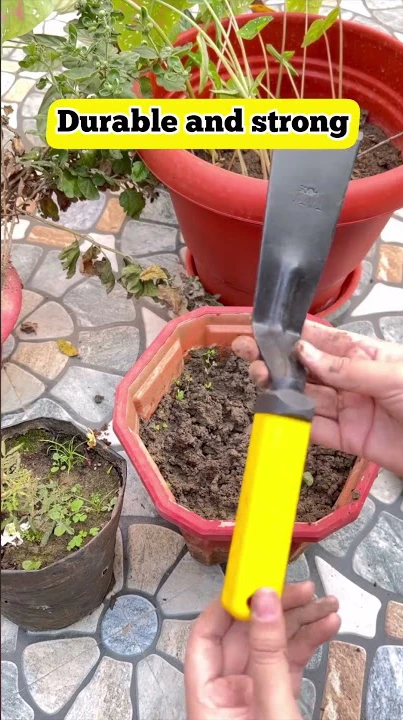
In this context, the best hand tools for small farmers play a critical role. From digging and weeding to soil preparation, these tools ensure that daily operations remain manageable without increasing operational costs. Manufacturers such as Tata Agrico have historically focused on producing reliable hand tools suited to Indian farming conditions, combining usability with long term durability. Choosing cost effective farming tools for small farms also supports financial sustainability, particularly in seasonal farming cycles.
Commercial Farming Equipment: Built for Scale and Speed
In contrast, large farms demand greater efficiency, consistency, and operational speed. These operations are often time sensitive, requiring tools designed for repetitive tasks and large area coverage.
What Defines Tools for Large‑Scale Farming
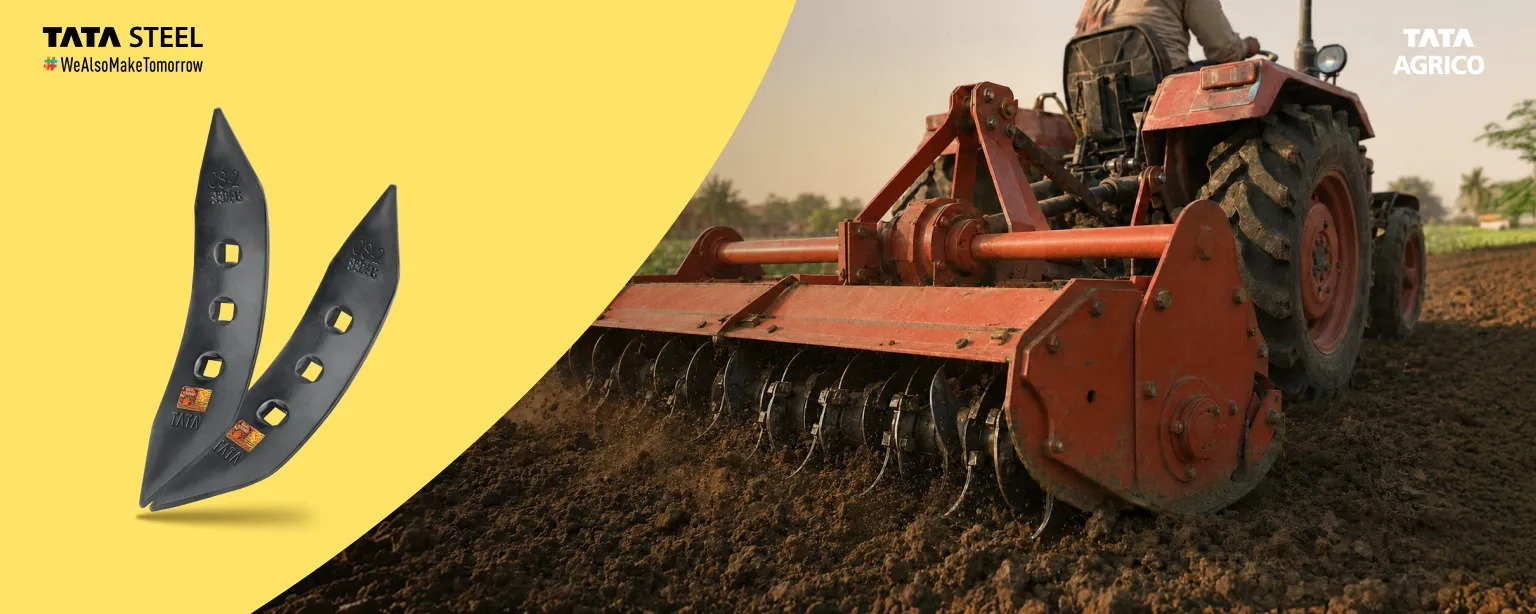
- Mechanisation Support: Compatibility with tractors and powered systems
- Higher Coverage Capacity: Ability to operate efficiently across large land areas
- Consistency in Output: Uniform performance over repeated cycles
This is where commercial farming equipment becomes essential. Unlike manual tools, such equipment is designed to reduce labour dependency while improving throughput. Tools for large scale farming help ensure productivity targets are met within tight timelines, especially during sowing and harvesting seasons.
Differences Between Small and Large Farm Equipment
Although both categories aim to improve productivity, their design and functionality differ significantly. Understanding the differences between small and large farm equipment helps farmers make informed purchasing decisions.
Scale of Operation
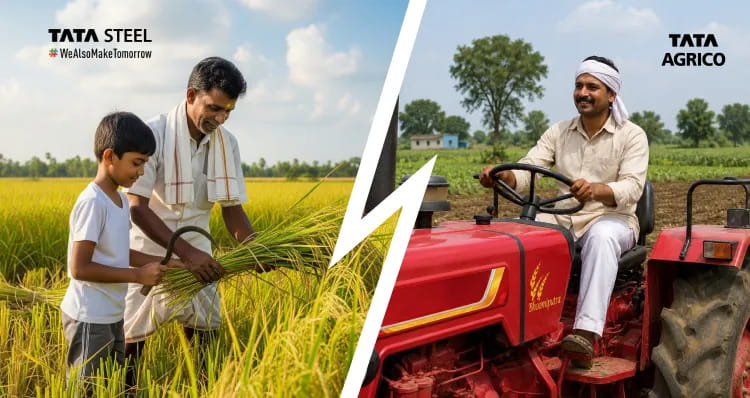
Small farms rely on compact, manual tools, whereas large farms use mechanised systems to improve efficiency.
Investment Capacity
Smaller operations prioritise affordable farming tools, while commercial farms focus on long‑term returns through high‑performance equipment.
Labour Dependency
Manual tools require more human effort, while mechanised equipment reduces labour involvement but necessitates skilled handling and maintenance.
Flexibility vs Specialisation
Tools for small farms are typically versatile and multi purpose, whereas commercial tools are specialised for specific tasks.
Balancing Cost and Performance Across Farm Sizes
Tool selection is not solely about scale; it also involves balancing affordability with durability.
• Small farmers benefit from affordable farming tools that offer reliable and consistent performance.
• Commercial operations gain from scalable tools for agriculture businesses that support expanding production demands.
Across both segments, there is a growing emphasis on durable agricultural tools in India that can withstand diverse soil types and climatic conditions. Tools engineered with consistent material quality and field tested performance, such as those developed by Tata Agrico, are built to endure repetitive use without frequent replacements, making durability a practical necessity rather than merely a feature.
Evaluate Material and Durability
When deciding how to choose a strong shovel, material quality should be a priority. High-carbon or manganese steel offers excellent resistance to wear and impact, making it suitable for demanding environments.
Farm Productivity Tools: A Shared Objective
Despite their operational differences, both small and large farmers share the goal of improving productivity and yield. The right farm productivity tools help streamline processes, reduce time wastage, and enable better crop management.
Whether it is a hand tool for precise soil work or a mechanised implement for rapid field coverage, the underlying objective remains the same: enhancing output while optimising effort.
What This Means in Practice
Selecting the right agricultural tools depends more on actual farm requirements than on trends. Small farmers benefit from practical, easy to use tools that keep costs under control, while commercial farms rely on scale driven equipment to maintain efficiency and output.
Recognising these distinctions leads to better investment decisions, improved productivity, and tools that genuinely support the nature and scale of farming operations.